
Motor neurone disease (MND) is a progressive neurological condition that affects the nerves controlling movement, gradually making everyday activities such as walking, speaking, swallowing and breathing more difficult. Although there is currently no cure for MND, treatments are available to help manage symptoms and, in some cases, slow disease progression.
The care pathway for motor neurone disease involves specialist care, medication, symptom management and ongoing support tailored to each person’s needs. Understanding these steps can help individuals and families prepare for changes and make informed decisions about care at home.
What Is Motor Neurone Disease (MND)?
Motor neurone disease (MND) is a condition that affects the motor neurones, the nerve cells that carry messages from the brain and spinal cord to the muscles. Over time, these nerve cells become damaged and stop working properly.
As a result, muscles gradually weaken, making everyday activities such as walking, speaking, swallowing and breathing more difficult. The condition progresses differently in each person, so symptoms and care needs can vary.
Amyotrophic lateral sclerosis (ALS) is the most common form of MND. Although the terms are sometimes used interchangeably, ALS is one type of motor neurone disease.
There is currently no cure for MND. However, treatments can help manage symptoms and, in some cases, slow the progression of the disease. Access to specialist care can also help people understand their treatment options and plan for changing care needs.
What Are the Early Signs and Symptoms of Motor Neurone Disease?

Early signs of motor neurone disease can be difficult to recognise, as they may develop gradually and resemble symptoms of other conditions. The first symptoms depend on which motor neurones are affected.
Common early signs include:
- Muscle weakness: Difficulty gripping objects, fastening buttons, carrying shopping or climbing stairs.
- Muscle twitching and cramps: Involuntary muscle twitching or painful muscle cramps.
- Changes in walking: Frequent trips or falls, difficulty lifting the front of the foot or problems with balance.
- Speech difficulties: Speech may become slurred or less clear.
- Swallowing difficulties: Eating and drinking may become harder if the muscles used for swallowing are affected.
These symptoms do not necessarily mean someone has MND, as other conditions can cause similar problems. However, anyone experiencing persistent or unexplained muscle weakness, repeated falls, or changes in speech or swallowing should seek medical advice from their GP.
Recognising these early signs can help people get the right assessment and, if necessary, a referral to a neurologist for further investigation.
How Is Motor Neurone Disease Treated?
The treatment pathway for motor neurone disease focuses on three main areas: slowing disease progression where possible, managing symptoms and helping people maintain independence for as long as possible.
Treatment is not the same for everyone. The specialist team considers the person’s symptoms, general health, preferences and how the condition is changing. The following steps explain how treatment and support may be introduced.
Step 1: Assessment by a Specialist MND Team

After diagnosis, the person should receive information about specialist MND services and how to access ongoing care.
A multidisciplinary team may include:
- Neurologist: Diagnoses MND and manages medical treatment.
- MND specialist nurse: Provides advice, answers questions and helps coordinate care.
- Physiotherapist: Helps with movement, muscle stiffness and mobility.
- Occupational therapist: Recommends equipment and home adaptations to make daily tasks easier.
- Speech and language therapist: Helps with speech, communication and swallowing difficulties.
- Dietitian: Provides advice on nutrition and managing weight loss.
- Respiratory specialist: Checks breathing and helps manage breathing difficulties.
- Palliative care team: Helps manage symptoms and improve comfort and quality of life.
The team works together so that changes in one area, such as swallowing or mobility, can be considered alongside the person’s wider needs.
Step 2: Discuss Medication That May Slow Disease Progression

One of the first treatment discussions may concern riluzole, a medicine used for people with the ALS form of MND.
Riluzole is not a cure and does not restore lost muscle strength. However, evidence indicates that it can extend survival by several months on average. A neurologist or another appropriately experienced specialist assesses whether it is suitable.
Before and during treatment, the clinical team may arrange blood tests to monitor liver function and check for potential side effects. The person should follow the prescribing team’s instructions and report any concerns.
It is important to understand the difference between disease-modifying treatment and symptom management. Riluzole may slow the progression of the disease to a limited extent, while other treatments aim to relieve particular symptoms or make everyday activities easier.
The specialist should explain the expected benefits, limitations, monitoring requirements and any relevant risks.
Step 3: Treat Symptoms as They Develop

MND can cause different symptoms at different stages. Rather than waiting for difficulties to become severe, the care team assesses emerging problems and discusses appropriate treatment.
Examples include:
| Symptom or difficulty | Treatment or support that may help |
| Muscle stiffness and cramps | Prescribed medication, physiotherapy advice and appropriate positioning |
| Excess saliva or thick secretions | Medication, swallowing advice and specialist assessment |
| Speech difficulties | Speech and language therapy, communication strategies and assistive technology |
| Swallowing difficulties | Assessment by a speech and language therapist, dietary changes and advice on safer eating and drinking |
| Weight loss or reduced food intake | Dietitian support, nutritional supplements where appropriate and discussion of feeding options |
| Breathlessness or a weak cough | Respiratory assessment, breathing support and techniques to help clear secretions |
| Anxiety or emotional distress | Psychological support, counselling or other appropriate treatment |
The right approach depends on the person’s symptoms and medical circumstances. Some symptoms may require more than one form of support, and treatments should be reviewed if they become less effective or cause unwanted effects.
Step 4: Introduce Equipment and Adaptations Before They Become Urgent

As muscle weakness progresses, activities that were previously straightforward may require more effort or become unsafe. Equipment and home adaptations can help reduce these difficulties.
An occupational therapist or physiotherapist may assess whether the person would benefit from:
- Walking aids or a wheelchair.
- Grab rails, ramps, stair lifts or other home adaptations.
- Specialist seating and positioning equipment.
- Adapted utensils or other aids for eating and daily tasks.
- Communication devices that allow the person to express their needs.
- Equipment to help carers support transfers and personal care safely.
Planning ahead is particularly important because arranging and supplying equipment can take time. The care team should review the person’s needs regularly and refer them to appropriate services without unnecessary delay.
The aim is to make daily activities safer, conserve energy and help the person continue participating in decisions and activities that matter to them.
Step 5: Monitor Swallowing, Nutrition and Breathing

Swallowing and respiratory difficulties can have a significant effect on health and comfort, so these areas need ongoing assessment.
Swallowing and nutrition: If eating takes longer, meals become tiring or weight begins to fall, the person may need a swallowing assessment and advice from a dietitian. Depending on the findings, the team may recommend changes to food consistency, suitable drinks, nutritional supplements or other approaches.
If swallowing becomes unsafe or adequate nutrition cannot be maintained, the team may discuss a feeding tube. This is an individual decision that should include the person’s preferences, the potential benefits and risks, and the likely effect on daily life.
Breathing: Respiratory assessments help identify changes in breathing strength and cough effectiveness. Symptoms such as breathlessness, disturbed sleep, morning headaches or unusual daytime tiredness should be discussed with the specialist team.
Some people may benefit from non-invasive ventilation, which uses a mask and machine to support breathing. Other respiratory interventions may be considered according to individual needs and preferences.
These assessments are not simply for the later stages of MND. Monitoring allows the team to discuss options early enough for the person and their family to make informed decisions.
Step 6: Review the Care Plan as Needs Change
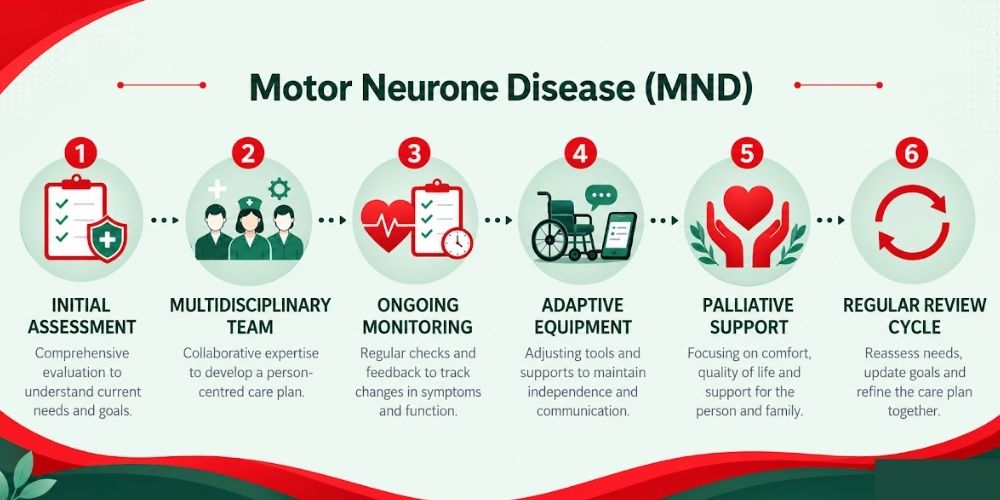
The MND care pathway is ongoing rather than a fixed sequence of treatments. A person may need different support as symptoms develop, and several treatments may be used at the same time.
At follow-up appointments, the team may review:
- Changes in muscle strength, mobility and falls risk.
- Speech, communication and swallowing.
- Weight, nutrition and hydration.
- Breathing, cough strength and sleep.
- Pain, cramps, stiffness and other symptoms.
- Emotional wellbeing and family-carer needs.
- Equipment, home adaptations and personal-care arrangements.
People and their families should report significant changes between routine appointments rather than waiting for the next review. A change in breathing, swallowing, mobility or the ability to manage daily activities may mean the care plan needs to be updated sooner.
The aim is to coordinate medical treatment, practical assistance and future planning around the person’s current needs.
How Does Care Change as Motor Neurone Disease Progresses?
As motor neurone disease progresses, the balance between treatments, equipment and hands-on support may change. The rate of progression varies, so care should be based on the person’s actual needs rather than a fixed timetable.
In the earlier stages, support may focus on understanding the diagnosis, discussing riluzole, managing initial symptoms and planning for changes in mobility or communication.
As symptoms develop, the person may need more help with walking, dressing, bathing, preparing meals and attending appointments. Communication aids, mobility equipment and adaptations may become increasingly important. Swallowing and respiratory needs also require close monitoring.
When support needs become more complex, the team may arrange additional community services, specialist equipment, increased help at home or more intensive clinical support. Palliative care can be introduced to help manage symptoms, emotional distress and decisions about future care.
Palliative care is not limited to the final days of life. It can be provided alongside other treatments when a person has significant or complex needs, with the aim of improving comfort and quality of life.
Planning ahead gives the person opportunities to discuss their preferences, identify who should be involved in decisions and consider the types of support they may want in the future.
What Care and Support Are Available at Home for People With MND?
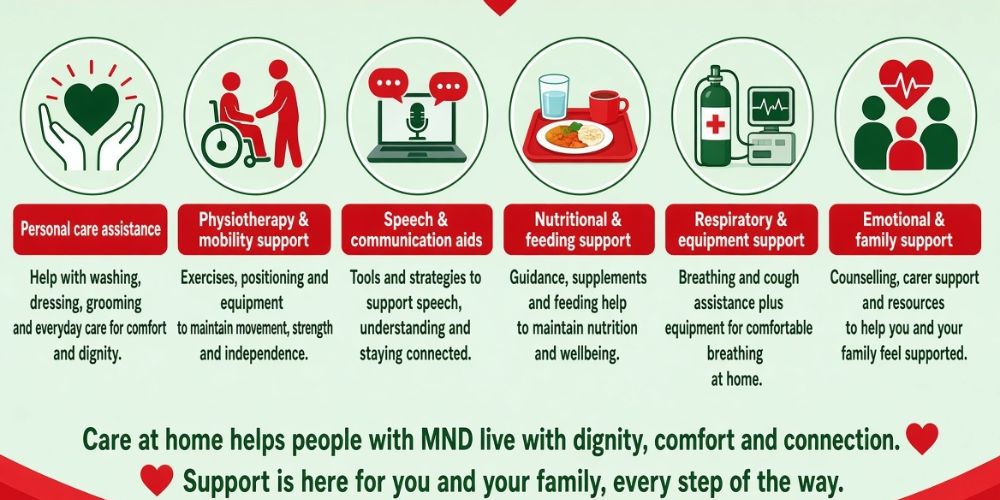
Many people with MND wish to remain at home for as long as possible. Whether this is practical depends on their symptoms, home environment, clinical needs and the support available.
Medical treatment and specialist monitoring remain important, while home-care services can help with everyday activities and provide practical assistance that complements the wider care plan.
Personal Care and Daily Activities
As movement and muscle strength change, a person may need help with washing, dressing, grooming, toileting and other personal routines.
A home-care plan can be tailored to the person’s abilities, preferences and daily schedule. Carers can provide agreed assistance while encouraging the person to do as much as they comfortably and safely can for themselves.
Meals, Mobility and Everyday Routines
MND can make preparing meals, moving around the home and completing household tasks increasingly tiring.
Depending on the agreed care plan, carers may help with meal preparation, everyday routines and mobility-related tasks within their training and role. Any swallowing difficulties or specialist dietary instructions should be followed in accordance with advice from the relevant healthcare professionals.
Equipment, adaptations and guidance from occupational therapists can help make these activities safer.
Supporting Family Carers
Family members often provide substantial practical and emotional support. Over time, they may need help balancing caring responsibilities with work, rest and other commitments.
Planned home care or respite care may provide additional assistance, allowing family carers to take a break while the person continues receiving agreed support.
The care plan should make clear which tasks are undertaken by home-care workers and which require clinical expertise, specialist training or input from the NHS team.
Coordinating Home Care With the Specialist Team
Home-care providers do not replace the MND specialist team. Their role is to deliver agreed practical support and communicate relevant changes in the person’s daily needs through the appropriate channels.
A useful care arrangement should identify the person’s routines, communication preferences, mobility requirements, relevant risks and who to contact if needs change.
For families considering support at home, Proper Home Care’s personal care services, specialist care and palliative care services may be relevant depending on the individual’s needs and the services available.
Frequently Asked Questions About the MND Care Pathway
What are the first signs of motor neurone disease?
Early signs of motor neurone disease may include muscle weakness, twitching, cramps, frequent trips or falls, and changes in speech or swallowing. These symptoms can have other causes, so consult your GP if they persist.
How long do MND patients live?
Many people with MND live for around two to five years after symptoms begin, although some live considerably longer. Life expectancy varies depending on how the condition progresses in each person.
Is motor neurone disease serious?
Yes, motor neurone disease is a serious, progressive condition that affects movement, speech, swallowing and breathing. Although there is no cure, treatment and specialist support can help manage symptoms and improve quality of life.
What are the treatment options for motor neurone diseases?
Treatment options include riluzole for eligible people, medication to manage symptoms, physiotherapy, speech and language therapy, nutritional support and breathing assistance. The specialist MND team tailors treatment to each person’s needs.
Can motor neurone disease be prevented?
There is currently no established way to prevent MND. Researchers continue to investigate its causes and risk factors. Because many early symptoms can also occur in other conditions, seeking medical advice for persistent or unexplained muscle weakness and related symptoms is important, although this does not itself prevent MND.
Final Thoughts
The care pathway for motor neurone disease involves specialist assessment, treatment, symptom management and ongoing support as needs change. Understanding each stage helps individuals and families plan ahead, make informed decisions and work with healthcare professionals to address changing mobility, communication, swallowing and breathing needs while maintaining comfort, safety and quality of life.
Proper Home Care Limited provides personalised support at home, helping people living with MND with daily routines and personal care while respecting their preferences and independence. With the right support, families can feel better prepared to manage the challenges of the condition and focus on spending meaningful time together.