
For some older people, the daytime is manageable, but night-time is when difficulties begin.
Getting out of bed safely, reaching the bathroom, becoming confused after waking, or simply feeling frightened about being alone can turn an otherwise manageable routine into a difficult one. For families, it can also mean interrupted sleep and regular night-time checks to make sure their loved one is safe.
But how do you know when these difficulties have become more than an occasional problem?
Overnight care for elderly people may be worth considering when an older person can no longer manage safely or confidently through the night. Factors to consider include how frequently help is needed and whether the person can safely be left alone between periods of assistance.

What Does Overnight Care Involve?
Overnight care is care provided in an older person’s own home during the night.
For families considering overnight care for elderly people, this can provide support during the hours when their loved one may be more vulnerable or less confident managing alone.
It does not necessarily mean that a carer has to remain awake for the entire night. The arrangement depends on the person’s needs.
- Need help getting out of bed
- Require assistance walking to the bathroom
- Need support with continence during the night
- Become confused or distressed after waking
- Need help repositioning themselves in bed
- Are recovering from an illness, injury or hospital stay
- Feel unsafe being alone overnight
- Need regular reassurance or supervision
When Might an Older Person Need Overnight Care?
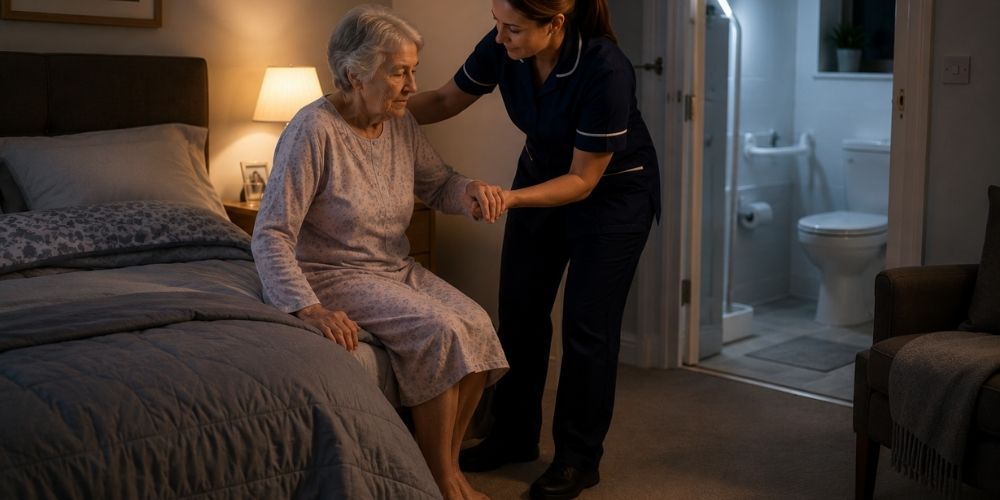
Overnight care may be needed when an older person finds it increasingly difficult to manage safely at night. This could include frequent waking, difficulty reaching the bathroom, confusion, falls, anxiety about being alone, or recovery after illness or hospital discharge.
1. Struggling with Night-Time Toileting

Night-time toileting can become difficult when mobility, strength or balance have changed.
An older person may know that they need the toilet but struggle to:
- Sit up and get out of bed
- Stand safely
- Walk to the bathroom
- Use the toilet independently
- Return to bed afterwards.
2. Finding It Harder to Move Around Safely

Getting up in the dark can be particularly challenging for someone who already has reduced mobility or balance.
A previous fall can also make an older person more hesitant about moving around independently. At the same time, being frightened of falling does not necessarily stop them from trying to get up when they need the toilet or want something during the night.
If an older person is repeatedly attempting to move without the support they need, it is worth reviewing their care arrangements rather than waiting for another fall to occur.
3. Dementia and Night-Time Changes
Dementia can affect the normal sleep-wake cycle. A person may wake during the night, have difficulty getting back to sleep, or believe that it is daytime. Confusion, restlessness and wandering can also occur.
For example, someone may wake at 2 am believing they need to get ready for work, try to leave the house or become distressed because they do not recognise their surroundings.
In these circumstances, night care can provide reassurance and supervision while helping the person remain in familiar surroundings.
It is important, however, not to assume that every sudden change in night-time behaviour is simply part of dementia. Pain, illness, medication and other physical or mental health changes can also affect sleep and behaviour. New or sudden changes should be discussed with an appropriate healthcare professional.
4. Struggling to Settle Without Someone Nearby

Not every night-time care need is physical.
An older person may be able to get around their home independently but feel increasingly worried about being alone overnight.
They might repeatedly call a family member, use a personal alarm because they are frightened of falling, or simply struggle to settle because they are worried that nobody is nearby if something goes wrong.
In these situations, the presence of an appropriate night carer can provide reassurance without necessarily taking over tasks the person can still manage themselves.
5. Finding It Harder to Manage After a Hospital Stay
Overnight care does not always have to be a permanent arrangement.
Someone who normally manages well at home may temporarily need additional support after an illness, injury or hospital attendance. For example, they may be physically weaker, less steady on their feet or need help with toileting while recovering.
This is why it can be useful to review care needs as circumstances change rather than assuming that the level of support required today will always be necessary.
What Are the Signs That Night-Time Support Is Becoming Necessary?
Families often notice the change gradually rather than all at once.
You may want to review an older person’s overnight care needs if:
- They are getting out of bed without being able to do so safely
- They have had a fall or several near-falls at night
- They need increasing assistance to reach the bathroom
- They are wandering around the house after waking
- They are becoming unusually confused or distressed during the night
- They regularly call family members for help
- They cannot settle back to sleep without assistance
- They are becoming increasingly frightened of being alone overnight
- Their mobility has deteriorated
- Their care needs have increased following illness or hospital discharge
- A family member is regularly losing sleep to provide night-time care
None of these signs automatically means that overnight care is required.
Instead, they suggest that the person’s current arrangements may need to be reviewed.
A Simple Way to Decide Whether Overnight Care Is Needed
It is not simply about how often an older person wakes during the night. The key is what happens when they wake and whether they can manage safely without support.
Families can consider:
- What happens when they wake? Do they need help with the toilet, mobility, reassurance, or settling back to sleep?
- How much physical support do they need? Can they get out of bed, walk safely and return to bed independently?
- How often does it happen? Occasional support may suit sleeping night care, while frequent or unpredictable needs may indicate waking night care.
- Can they safely be left alone? Consider the risk of falls, wandering, confusion or being unable to get help.
- Is family sleep being affected? If relatives are regularly providing support overnight, it may be time to review the current care arrangements.
Waking Night Care or Sleeping Night Care: Which Is Needed?

This distinction is particularly important when considering overnight home care.
1. Waking Night Care
With waking night care, the carer remains awake throughout the night and is available to provide active support whenever it is required.
This may be appropriate when an older person:
- Wakes frequently
- Needs regular assistance with toileting
- Requires help with mobility several times during the night
- Is likely to wander or become confused
- Needs regular reassurance
- Cannot safely be left without an awake carer
For example, if someone needs help getting out of bed every couple of hours, sleeping night care may not provide the level of support they require.
2. Sleeping Night Care
With sleeping night care, the carer is able to sleep during the night but is available if the person wakes and requires assistance.
This can be more appropriate where an older person generally sleeps through the night but may occasionally need help.
For example, someone might usually sleep until morning but need assistance getting to the bathroom once during the night.
What Does an Overnight Carer Actually Do?
An overnight carer provides support based on an older person’s individual care plan and usual night-time routine. Depending on their needs, this may include support before bed, during the night and in the morning.
Before Bed
The carer can help the person prepare for sleep, get comfortable and ensure essential items are within easy reach.
During the Night
If the person wakes, the carer may assist with mobility, toileting, repositioning, reassurance or other agreed care needs, before helping them settle back to sleep.
In the Morning
Depending on the care arrangement, support may continue into the morning routine, helping the person get ready for the day.
Frequently Asked Questions About Overnight Care
What Does Overnight Care for Elderly People Provide?
Overnight care for elderly people provides support during the night in their own home. Depending on their needs, overnight carers may assist with mobility, toileting, reassurance, repositioning or other agreed care needs.
What is the difference between waking night care and sleeping night care?
With waking night care, the carer remains awake throughout the night and provides active support whenever it is required. With sleeping night care, the carer is able to sleep but remains available if the person wakes and requires assistance.
When might an older person need overnight care?
An older person may benefit from overnight care if they regularly need help getting out of bed, using the bathroom, moving around safely, managing night-time confusion or settling after waking. It may also be appropriate following an illness, injury or hospital stay.
Can overnight care help someone with dementia?
It can. Someone living with dementia may experience confusion, restlessness, wandering or changes to their normal sleep pattern. Appropriate night care can provide reassurance and support when these difficulties occur. Sudden changes in behaviour should be discussed with an appropriate healthcare professional.
Can overnight care be temporary?
Yes. Overnight care may be arranged temporarily while someone recovers from an illness, injury or hospital stay. It can also become a longer-term arrangement if their care needs continue or increase.
Conclusion
Night-time difficulties do not automatically mean an older person needs 24-hour care or has to move into residential care. The important consideration is whether they can manage safely between periods of support and what happens when they wake.
For some people, occasional help with toileting, mobility or settling back to sleep may be enough. Others may require sleeping night care, while frequent waking, wandering, falls or unpredictable support needs may make waking night care more appropriate.
For families, changes such as repeated night-time falls, increasing reliance on relatives or growing difficulty managing alone should prompt a review of the current care arrangements. Well-planned overnight care for elderly people can help an older person remain at home while providing families with greater reassurance that their loved one is supported when they need it most. Proper Home Care Limited provides personalised night care at home tailored to individual needs and routines.